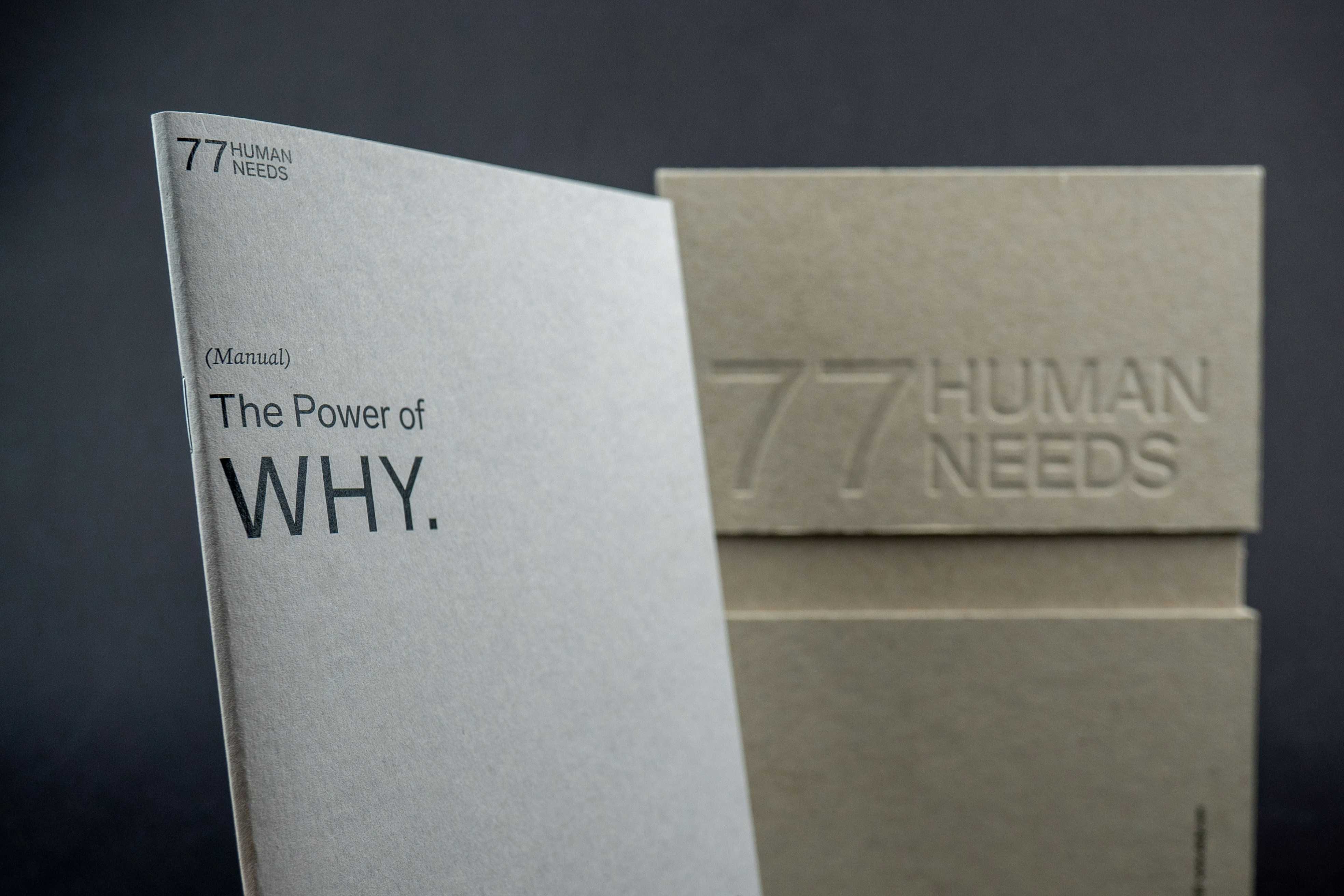
Guidelines are not a record of what was made. They are instructions for whoever makes the next thing, on a Thursday, without you.
Most brand books are written as a defence of the work. Pages of rationale, a grid of the mark on ten backgrounds, a colour palette with poetic names. None of it answers the question that actually arrives, which is what size the logo goes on a thing nobody anticipated.
Write for the person who was not there
The reader is a junior designer at an agency you did not hire, working at seven in the evening against a deadline. They will read one page. Make it the page with the answer.
Rationale belongs at the back, or in a separate document. Putting it first guarantees the rules are skimmed.
If a rule needs a designer to interpret it, it is not a rule.
Give numbers, not adjectives
"Generous white space" is not a rule. A minimum clear space expressed as a multiple of the mark's height is a rule, and it can be checked without judgement.
The same goes for type: a table of sizes by application beats a paragraph about hierarchy. On the photography studio the whole specification is one page of numbers and one example.
Show the failure, not just the success
A page of correct usage teaches less than a page of the four mistakes that actually happen. Put the redrawn mark, the stretched lockup and the wrong blue in the book with a line through them.
People recognise their own instinct in those examples. That is what stops it.